Used Senior Flex Drivers Available Now
If you have been playing the same driver for ten years and it has stopped going anywhere, the club has probably not changed. You have.
Arccos tracked twenty million drives and found the average male golfer loses 10 to 12 yards a decade after fifty: male golfers drive around 216 yards in their fifties, 205 in their sixties, 194 in their seventies.
That is slow enough that you barely notice it happening and large enough that the driver you were correctly fitted for at fifty-five is the wrong club at sixty-five. On our own scale it is also the crossover point: the average male golfer moves out of regular flex and into senior somewhere in his early sixties.
Shaft flex is usually the first thing to go out of alignment, and it is the one most golfers have never checked.
What shaft flex actually is
The shaft bends during your swing. It loads going back and down, then unloads through the ball, and a shaft matched to your speed releases that stored energy just as the club reaches impact.
Flex is how much bend the shaft allows. The scale runs, softest to stiffest: Ladies, Senior, Regular, Stiff, Extra Stiff. There is no industry standard behind those labels, so one maker's Regular is another's Stiff, which is part of why this is so hard to shop for.
A shaft that is too stiff for you never fully loads. You get a lower launch, less carry, and a club that feels harsh rather than lively. Too soft is the rarer problem past fifty, and it shows up as inconsistency rather than lost distance.
Why it matters more as you get older
Two things happen at once, and they compound rather than cancel.
Your clubhead speed drops, which is the decline in the numbers above. And a slower swing naturally produces a lower launch and less backspin, so the ball comes down sooner. A shaft that is too stiff pushes launch lower still. You end up fighting the same problem from two directions.
That is why a mismatch which costs a fast player a couple of yards costs a slower one a great deal more. It is also why the fix is rarely the shaft on its own.
What the makers actually do about it
This is the part that catches people out. A listing that says senior flex is telling you about one component. The clubs genuinely built for a slower swing are lighter everywhere.
Ping's HL build is the clearest example. It is not a softer shaft bolted onto the standard club. The head is lighter, around 196 grams against 199 to 205 for the rest of the range. The shaft is a 38 or 45 gram ALTA Quick. Even the grip is a lighter Lamkin. The whole club is built down in weight, and it is half an inch longer to give a little speed back.
Every maker has a version of this. Callaway's Max Fast and TaylorMade's Max Lite are built the same way. Cobra's F-Max Airspeed takes the whole club to around 285 grams, the lightest in golf. Titleist's 1-series is lightened the same way, across the whole club rather than at the shaft alone.
They also tend to add loft, set the head a little more upright, and offer a draw-biased version, because a slower swing that loses the ball tends to lose it to the right.
What a better fit actually gets you
Not a transformation. Anyone promising you twenty yards is selling something.
What a correctly fitted driver does is stop working against you. The ball launches higher and stays in the air longer, which is where most of the recovered distance comes from. Contact gets more consistent, because you are no longer swinging harder to make a stiff shaft do something it will not do. And the miss tightens up.
For a sense of scale, Ping's own testing of the HL build found slower-swing players averaged nine yards more than with the standard build. That is a manufacturer's number, and it is for a whole lighter club rather than a shaft change alone, so treat it as the optimistic end. Single figures, not double.
How to read this page
Two things make senior flex harder to shop for than it should be.
Sellers use at least five names for the same spec. A flex, M flex, Lite, SR and Senior all mean the same band. And a good number of listings never fill the flex field in at all, even when the title says it plainly. Where the flex can be read from the title we read it, and where it cannot, the club is left out rather than guessed at.
Everything here is ranked by how well it fits a slower swing rather than by price, so a well-matched club at $90 sits above a poorly matched one at $300. Where the senior band runs thin the list widens one step to regular, and every card states which it is.
52 drivers matching this fit available right now
These are affiliate links: if you buy, eBay pays us a small commission at no extra cost to you. It never changes the ranking. Results are ordered by fit, and where drivers fit you equally well, the cheapest one comes first.


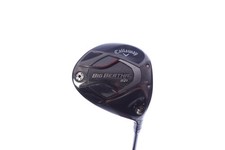

Showing the 12 best fits of 97. Use the finder below to narrow by budget, ball flight or brand.
Find your fit
Answer a few questions about your swing. Gender, age, and handedness are required; everything else has a “Not sure” option if you're unsure.